
Managing priorities, timelines, resources, stakeholder expectations, and cross-functional alignment directly affects organizational efficiency and execution. Many leaders are expected to navigate competing priorities and difficult conversations without formal negotiation training. Although often promoted for technical expertise or operational performance, they must also create alignment, manage expectations, and move discussions forward productively.
Effective negotiation is not about winning. It is about balancing competing priorities, constraints, and objectives so organizations can move forward. After more than 25 years of coaching, we have consistently seen strong negotiation skills improve communication, stakeholder alignment, decision-making, and collaboration.
Key Takeaways
- Negotiation is now a daily leadership capability, not a specialized executive skill
- Strong negotiation skills improve organizational efficiency, stakeholder alignment, and communication clarity
- Effective negotiation is primarily about alignment, structure, and decision-making rather than persuasion or confrontation
Why Negotiation Has Become Essential for Modern Leadership
Organizations today operate very differently than they did even a decade ago. Work is more collaborative, more cross-functional, and more interdependent. Leaders often rely on stakeholders outside their direct authority to move initiatives forward, making communication and alignment increasingly important.
As a result, fewer decisions can be made through authority alone. Alignment increasingly happens through conversation, which is one reason negotiation has become such an important leadership capability.
For additional insights into decision-making and negotiation psychology, see the research on emotional intelligence and negotiation effectiveness from the Program on Negotiation at Harvard Law School. It explores how emotions, emotional awareness, and interpersonal communication influence negotiation outcomes, trust, judgment, and decision-making during high-pressure conversations.
One challenge we frequently see is that many leaders still associate negotiation primarily with contracts or formal business deals. In reality, negotiation happens every day during stakeholder alignment meetings, resource allocation discussions, accountability conversations, project planning sessions, and executive decision-making discussions.
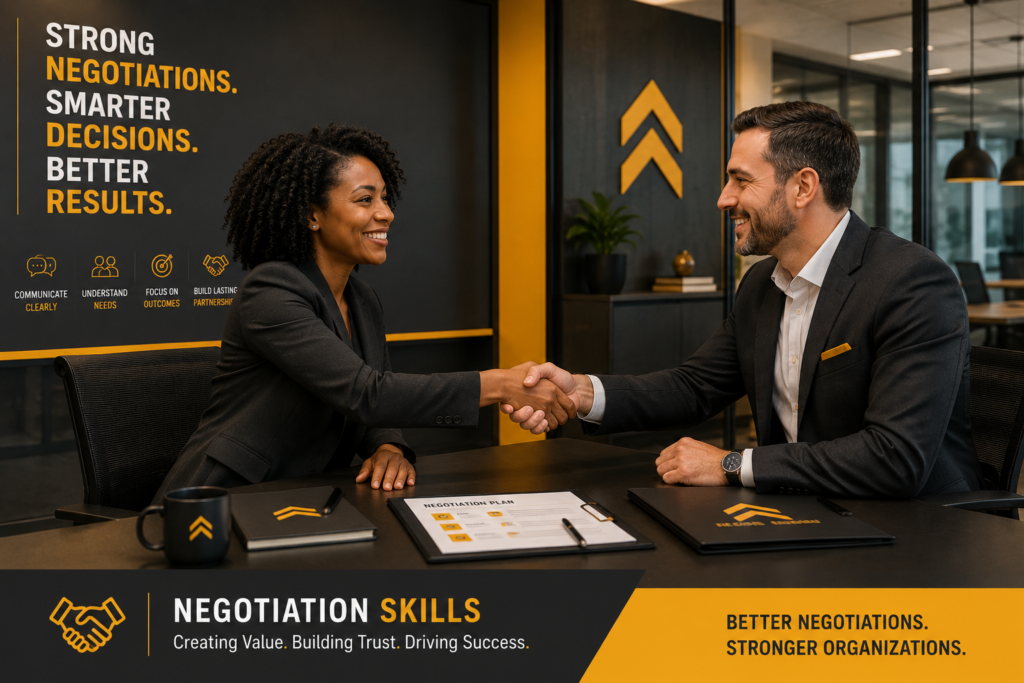
In each of these situations, the goal is not simply to communicate information. The goal is to create alignment, resolve competing priorities, and move work forward efficiently.
One of the biggest changes in modern organizations is the growing complexity of competing priorities. Leaders are constantly balancing timelines, budgets, workloads, stakeholder expectations, and operational realities. Without strong negotiation skills, these conversations can become unclear, emotionally reactive, or unnecessarily inefficient.
For additional insights into communication framing and influence under pressure, see the research on the framing effect from The Decision Lab, which explains how the way information is presented can influence perception, decision-making, and how people respond to the same message in different contexts.
Strong negotiators approach conversations differently. Rather than focusing only on positions or reacting emotionally, they focus on outcomes, organizational priorities, trade-offs, and long-term alignment. This often creates conversations that feel calmer, more structured, and more productive.
One pattern we frequently observe after negotiation training is that leaders become much more intentional in their preparation. They begin thinking more carefully about desired outcomes, areas of flexibility, stakeholder concerns, realistic trade-offs, and where boundaries need to remain firm.
Another important factor is organizational efficiency. Weak negotiation habits often create operational drag that organizations mistakenly view as execution problems. In reality, many of these challenges begin with conversations where expectations, priorities, accountability, or trade-offs were never clearly aligned.
This is why negotiation capability increasingly affects how efficiently organizations function overall.
Why Leaders Often Struggle With Negotiation
Most negotiation challenges are not caused by a lack of intelligence or professionalism. More often, they are driven by pressure, ambiguity, emotional reactions, and a lack of communication structure.
One challenge we frequently see is that leaders overexplain during difficult conversations. They feel pressure to justify decisions extensively in order to reduce resistance or maintain consensus. While well-intentioned, excessive explanation often weakens clarity and makes conversations longer and harder for stakeholders to process.
Another common challenge involves avoiding pushback. Many leaders worry that being direct may create tension or damage relationships, so they become overly accommodating or unclear about priorities and expectations. Unfortunately, avoiding tension rarely removes it. More often, it simply delays it.
For additional insights into conflict avoidance and emotional regulation during negotiation, see this research on stress and emotional regulation from the American Psychological Association, which explores how stress affects communication, decision-making, and interpersonal interactions during high-pressure conversations.
One pattern we frequently observe is that leaders negotiate positions rather than outcomes. They become attached to a specific solution, timeline, or request instead of focusing on the broader organizational objective. This often reduces flexibility and makes alignment more difficult.
Strong negotiation training changes this significantly. Leaders begin focusing more on operational realities, competing priorities, and practical outcomes that support execution rather than defending a particular position.
Another major challenge involves emotional reactions under pressure. When conversations become tense, leaders may become defensive, reactive, or overly rigid without realizing it. As stress increases, listening quality often decreases and communication becomes more positional.
Strong negotiators approach these situations differently. They view pushback as useful information that helps clarify concerns, priorities, risks, and stakeholder needs. This shift improves conversation quality because leaders stop reacting emotionally and begin listening more strategically.
Preparation is another critical factor. Many leaders enter important conversations with only a general sense of what they want rather than a clear understanding of desired outcomes, stakeholder concerns, possible objections, operational constraints, and acceptable trade-offs.
One of the biggest shifts we frequently observe after training is that leaders approach negotiation conversations with greater structure and intention. This often reduces emotional reactivity and improves communication clarity almost immediately.
How Strong Negotiation Skills Improve Organizational Efficiency
Negotiation directly affects how efficiently organizations operate.

When leaders negotiate effectively, decisions move forward faster, communication becomes clearer, and teams spend less time revisiting unresolved issues or navigating unnecessary friction.
One challenge we frequently see is that organizations often underestimate how much operational inefficiency originates from weak alignment conversations. Projects stall because expectations are unclear, meetings become repetitive because priorities were never fully agreed upon, and cross-functional tension increases because trade-offs were not discussed openly or consistently.
Strong negotiation capability reduces these problems significantly. One of the biggest organizational shifts we frequently observe after negotiation training is that conversations become shorter, clearer, and more productive. Leaders become more direct without becoming more aggressive, communicate priorities more clearly, ask stronger questions, and guide discussions toward decisions more efficiently.
As a result, organizations often see improvements in stakeholder alignment, accountability clarity, cross-functional collaboration, decision-making speed, and operational consistency. Another major improvement frequently involves accountability conversations. Leaders become more comfortable clarifying expectations, discussing ownership, and addressing issues earlier before they escalate into larger problems.
Another important benefit is calmer communication under pressure. Leaders often report feeling more composed during difficult discussions because they have stronger communication frameworks and better preparation habits. Instead of reacting emotionally, they become more intentional about listening, clarifying priorities, and guiding conversations toward workable outcomes.
One pattern we frequently observe during workshops is that teams become more collaborative once leaders improve how they negotiate. Conversations become less positional and more solution-focused. Stakeholders feel heard earlier in discussions, which often improves buy-in and reduces unnecessary resistance.
Clients frequently report that meetings become more focused, alignment happens earlier, decisions move faster, accountability becomes clearer, and escalation between teams decreases. These improvements often appear quickly because stronger negotiation capability changes how conversations are structured from the very beginning.
For organizations looking to improve communication clarity, stakeholder alignment, leadership effectiveness, and operational efficiency, our Negotiation Skills Training programs focus heavily on practical workplace negotiation, executive-level conversations, communication under pressure, and structured negotiation frameworks designed for real organizational environments.
Frequently Asked Questions
Why are negotiation skills important for leaders?
Leaders negotiate constantly through conversations involving priorities, timelines, accountability, resources, and stakeholder alignment. Strong negotiation skills improve communication clarity and organizational efficiency.
Is negotiation different from persuasion?
Yes. Effective workplace negotiation focuses on alignment, collaboration, and practical outcomes rather than simply convincing others to agree.
Why do leaders struggle with negotiation?
Many leaders lack formal negotiation training and rely on instinct during high-pressure conversations, which can lead to emotional reactions, unclear expectations, or overly accommodating communication.
How does negotiation improve organizational efficiency?
Strong negotiation reduces operational friction, improves stakeholder alignment, shortens meetings, clarifies accountability, and helps organizations make decisions more efficiently.
Can negotiation skills be improved through training?
Yes. Negotiation skills improve significantly through structured frameworks, preparation techniques, real-world practice, coaching, and feedback.
Conclusion
Negotiation is no longer a specialized executive skill used only during high-stakes business deals. It has become a core leadership capability that affects how organizations communicate, collaborate, align priorities, and execute work effectively. Leaders negotiate constantly through conversations involving timelines, accountability, stakeholder expectations, resources, operational trade-offs, and competing organizational priorities.
Strong negotiation capability helps leaders manage these conversations with greater clarity, structure, professionalism, and confidence. As organizations become increasingly cross-functional and communication-driven, leaders who negotiate effectively often create faster alignment, reduce operational friction, strengthen accountability, and improve collaboration across teams. In many cases, organizational performance improves not because complexity disappears, but because leaders become significantly better at navigating that complexity through conversation.
For professionals looking to elevate their negotiation skills, we offer Communication Skills Training, Negotiation Skills Training and Conflict Management Training programs across Canada and the United States.